heroic moments in poetry no. 4: page-based vs. spoken word (for Kasey)

Stan Lee and Jack Kirby, Fantastic Four 53, August 1966. Sometimes poetry HATES SPEECH.

heroic moments in poetry no. 3: ellipsis (for Michael)

Stan Lee and Jack Kirby, Fantastic Four 50, May 1966. Poetry ... reminds you that Joe Simon and Jack Kirby invented the romance comic.

heroic moments in poetry no. 2: simile (for derek)


Stan Lee and Jack Kirby, Fantastic Four 33, December 1964. Poetry likes its levels like it likes them.

heroic moments in poetry no. 1: onomatopoeia (for Christian and Sina)

Stan Lee and Jack Kirby, Fantastic Four 24, March 1964. Poetry is a giant angry baby with a terminal skin condition that looks when it says it sounds and sounds when it says it looks.

klingon clerk-typists, rejoice

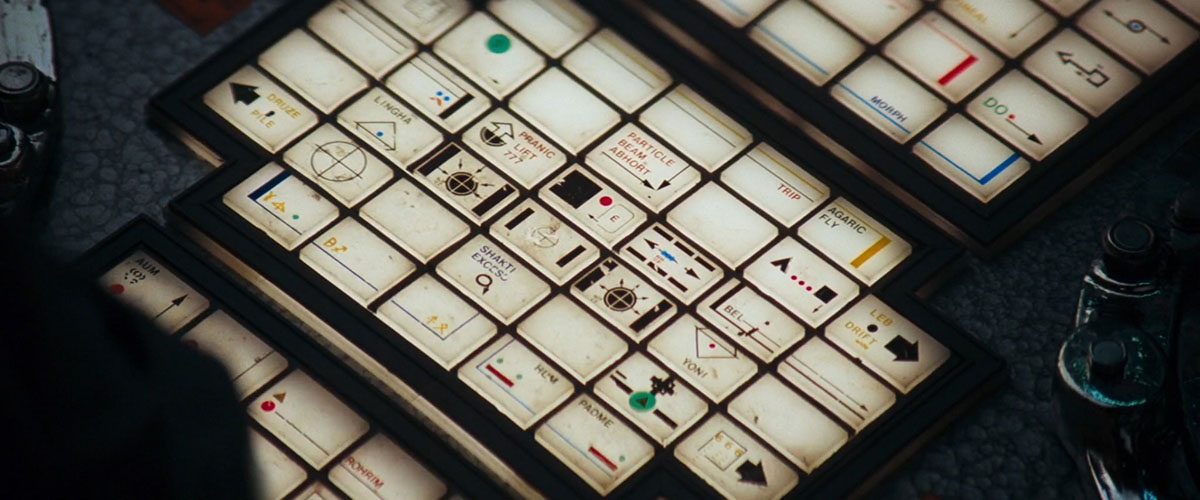
Klingon Keyboard

Many years ago, I translated bpNichol's first poem, "Translating Apollinaire," into Klingon. Evidently, it made something of an impression, because ever since then, people have bombarded me with links to All Things Klingon. As my uncles used to say, once they find your ass, they never stop kicking it.

(Click “Read more” below, or the title above, for the full post.)

"digital hooligans"

Brian Davis just posted a great piece on status update in the Globe Books section online:

Status update: 'Emily Brontë and her Playstation are overly friendly these days'

Facebook's status update bar may be its most popular, enduring and influential feature (given the rise of Twitter's real time fixes for the focus-challenged). For writers Darren Wershler and Bill Kennedy, status updates are also poetry. Or, rather, it becomes poetry after the RRS feeds of thousands of Facebook users have been harvested, shorn of the user names and attached to the names of dead poets or writers.

(Click “Read more” below, or the title above, for the full post.)

war rugs from afghanistan

Last Sunday, following up on a tip from Ed Pien, Kenny Goldsmith and I stopped by The Textile Museum of Canada to see Battleground: War Rugs from Afghanistan. Both The Toronto Star and Now listed it as one of the best gallery shows of 2008, and it did not disappoint: curator Max Allen has assembled 118 rugs from the period of the Soviet incursion into Afghanistan (1979) up to the present.

(Click “Read more” below, or the title above, for the full post.)

street poets and visionaries

Last night (January 9), Mercer Union launched "Street Poets & Visionaries: Selections from the UbuWeb Collection" to a packed house. The text that I wrote for the catalogue follows, as does a link to a Flickr set of images of the event.


The quality of mind in the radio telescope is its will to select.
-- Christopher Dewdney, "Parasite Maintenance" [1]


What are the outer limits of appropriation?

Digital culture is obsessed with this question, from both an aesthetic and a legal perspective. On the one hand is an entire century of artistic practices that gleefully encourage the copying and recirculation of cultural materials, from Delta blues and Dada to Flarf and mashups. On the other hand is an increasingly restrictive legal climate, which, as Siva Vaidhyanathan has argued at length, is entirely incapable of dealing effectively with "emerging communication technologies, techniques and aesthetics" [2].

(Click “Read more” below, or the title above, for the full post.)

game face

On November 19, Microsoft relaunched the XBox Live Network with a brand-new (bearing in mind that with Microsoft, new is always a relative state of mind) avatar-based interface, and the XBox-based portion of my online identity received an extreme makeover.


(Click “Read more” below, or the title above, for the full post.)

theanyspacewhatever: notes

On the way to theanyspacewhatever, the Guggenheim Relational Aesthetics show, I meet mariachis on the subway between 77th and 86th.


Maurizio Cattelan's "Daddy Daddy" -- drowned yet floating (because wooden? Then how'd he drown?) Pinocchio -- makes it all worthwhile immediately. Father of 4-year-old girl turns it into an object lesson about the importance of lifejackets.


The Guggenheim is a lot of things, but it is pretty clearly not anyspacewhatever. Whatever.


(Click “Read more” below, or the title above, for the full post.)


Syndicate content